
What Is the Difference Between All-on-4, All-on-6 and All-on-8? Which Dental Implant Technique Is Better?
When a patient loses most or all of the teeth in one arch, several full-mouth rehabilitation options become available. Among the best known are All-on-4, All-on-6 and All-on-8. The basic difference between them is the number of dental implants used to support the fixed bridge. However, choosing the right technique is more complex than simply choosing the highest number of implants.
Jawbone volume, the location of available bone, bite forces, gum condition, prosthesis design, general health and the dentist's treatment plan all influence which option is most suitable. When considering full-mouth dental implants in Turkey, an individualized evaluation is essential before choosing the implant protocol.
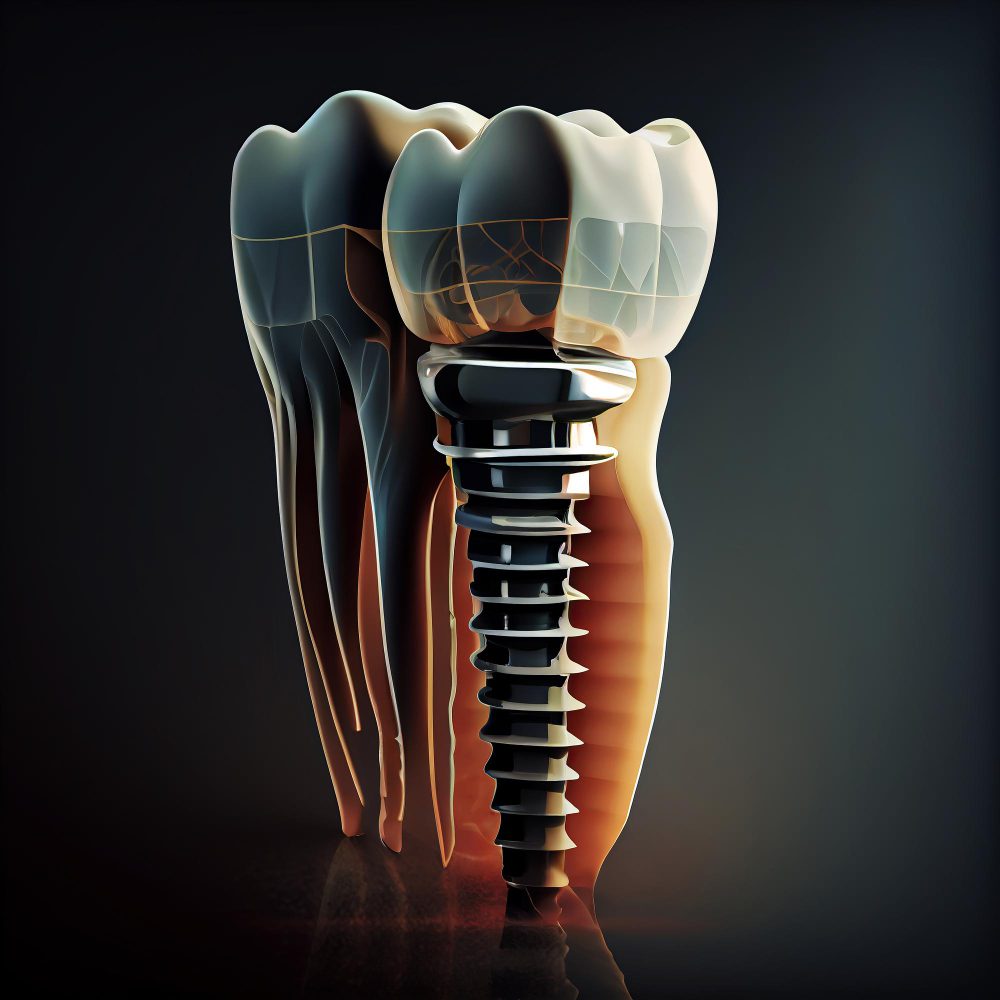
All-on-4 uses four implants to support a full-arch restoration, while All-on-6 uses six implants and All-on-8 uses eight. Increasing the number of implants may allow the prosthesis to be supported by more anchorage points when bone volume and jaw anatomy are suitable. However, this does not automatically mean that All-on-8 is better than All-on-6, or that All-on-6 is better than All-on-4.
For some patients, All-on-4 can be an appropriate and effective solution, while others may benefit from six or eight implants. The final decision should be based on clinical examination, 3D imaging and the dentist's surgical and prosthetic treatment plan.
First: What Do All-on-4, All-on-6 and All-on-8 Mean?
These terms generally describe methods of restoring a complete dental arch using a fixed bridge supported by dental implants.
The word “All” refers to the complete set of teeth incorporated into the full-arch bridge, while the number indicates how many dental implants are used as supports in the jaw.
What Is All-on-4?
A full-arch restoration supported by four dental implants. The well-known All-on-4 concept may use tilted posterior implants in selected cases to make use of available bone and reduce the posterior cantilever of the prosthesis.
What Is All-on-6?
Full-arch rehabilitation using six dental implants distributed according to the available bone and jaw anatomy. The additional implants may provide more support points when anatomical conditions are suitable.
What Is All-on-8?
A full-arch restoration supported by eight implants distributed across the dental arch. This approach requires suitable bone sites for a larger number of implants and is not necessary for every patient.
All-on-4 vs All-on-6 vs All-on-8: Key Differences
| Comparison Factor | All-on-4 | All-on-6 | All-on-8 |
|---|---|---|---|
| Implants per arch | 4 implants | 6 implants | 8 implants |
| Purpose | Full-arch restoration | Full-arch restoration | Full-arch restoration |
| Available bone requirement | May be suitable in selected cases where available bone is relatively limited. | Requires suitable sites for six implants. | Usually requires suitable sites for a larger number of implants. |
| Distribution of support | Support is distributed over four implant points. | Support is distributed over six implant points. | Support is distributed over eight implant points. |
| Tilted implants | Common within the All-on-4 concept. | Depends on anatomy and treatment plan. | Depends on anatomy and treatment plan. |
| Bone grafting | Careful implant positioning and angulation may sometimes reduce the need for grafting, but not in every case. | May be required when suitable bone sites are unavailable. | The patient may need sufficient bone to accommodate a larger number of implants. |
| Immediate loading | Possible in eligible cases. | Possible in eligible cases. | Depends on primary stability and the treatment plan. |
| Cost | Depends on the implant system, prosthesis and services. | May increase with additional implants and components. | May increase with additional implants and components. |
| Is a higher number always better? | No. The appropriate technique is the one that provides a stable and safe treatment plan for the individual patient. | ||
When Can All-on-4 Be the Right Choice?
All-on-4 is used to rehabilitate an edentulous arch or an arch containing teeth that cannot be preserved. The concept is based on supporting a complete fixed restoration with four strategically positioned implants.
Tilted posterior implants used in the All-on-4 concept may help make use of available bone and alter the implant emergence position in a way that supports the prosthetic design.
Fewer Implants
A complete arch can be rehabilitated with four implants rather than placing a separate implant for every missing tooth.
Using Available Bone
Strategic planning of implant positions and angles can help use available areas of bone effectively.
Potential for Early Loading
In cases that meet the requirements for adequate primary stability, an early temporary fixed restoration may be possible.
Are Four Implants Too Few?
Not necessarily. The number of implants cannot be evaluated separately from their distribution, length, diameter, bone quality, bridge design, bite force and occlusion. A treatment plan based on four implants can therefore be appropriate in selected cases after proper diagnosis.
When Can All-on-6 Be Better Than All-on-4?
All-on-6 uses six implants to support a complete arch restoration. When adequate bone quantity and quality are available at additional sites, the dentist may choose six implants to create a prosthetic plan with a greater number of support points.
However, six implants do not automatically guarantee a better result. Four properly distributed implants may be sufficient for one patient, while six implants may be more appropriate for another.
More Support Points
The bridge is distributed over six implants rather than four when bone availability and the prosthetic plan allow it.
Planning Flexibility
Additional implants may provide different options for distributing support, but their positions should be carefully planned rather than added simply to increase the number.
Adequate Bone Is Required
Safe and suitable sites must be available for all six implants, otherwise the treatment plan may need to be modified.
What About All-on-8? Are Eight Implants Better?
All-on-8 uses eight dental implants to support a complete fixed restoration for one arch. This provides a larger number of support points, but placing eight implants also requires suitable anatomical and bone sites where those implants can be positioned correctly.
All-on-8 should not be selected simply because the number is higher. If the clinical objectives can be achieved with four or six implants, adding implants that the patient does not need is not, by itself, a measure of better treatment.
Which Is Better: All-on-4, All-on-6 or All-on-8?
There is no single answer that applies to everyone. The best full-mouth dental implant technique is the one that best matches the condition of the jaw and the treatment plan, not necessarily the technique that uses the greatest number of implants.
| Possible Clinical Situation | What Might the Dentist Consider? |
|---|---|
| Limited suitable bone sites | Assessing whether All-on-4 or another plan can make effective use of the available bone. |
| Adequate bone for additional implants | All-on-6 or another design may be considered according to the goals of the prosthetic plan. |
| Large jaw with multiple suitable implant sites | The dentist may discuss using more implants when there is a clinical and prosthetic reason. |
| Bruxism or high bite forces | Occlusion, prosthesis design and force distribution need to be evaluated rather than simply counting implants. |
| Severe bone atrophy | The patient may require alternative options or additional bone procedures depending on anatomy. |
Does a Higher Number of Dental Implants Mean Greater Stability?
From an engineering perspective, increasing the number of support points may allow forces to be distributed across more implants. However, the clinical result does not depend on implant number alone.
An implant placed in an unsuitable position or inadequate bone does not become better simply because it is the sixth or eighth implant. Modern treatment planning therefore focuses on implant position, bone, force distribution, bridge design, occlusion and the ability to clean the prosthesis.
Bone Quality
Bone volume and density influence implant positioning and the surgical plan.
Implant Distribution
Implant spacing and anterior-posterior distribution affect the mechanical design of the restoration.
Occlusion
The way the teeth contact, chewing forces and bruxism are important factors in treatment success.
Type of Prosthesis
The material, bridge design and cantilever length influence how forces are transferred.
Gum Health
Periodontal disease and factors that increase the risk of inflammation around implants should be controlled.
Long-Term Maintenance
A cleanable prosthetic design and regular follow-up are important for maintaining the implants.
Which Technique Requires More Bone?
Placing more implants means the dentist must identify a greater number of suitable sites within the jaw. For this reason, All-on-6 or All-on-8 cannot be selected without evaluating the bone available at the required implant positions.
One advantage of the All-on-4 concept in some cases is the ability to modify the direction of the posterior implants to make use of available bone. However, All-on-4 does not guarantee that bone grafting can be avoided in every patient.
Can You Get Teeth on the Same Day With All-on-4, All-on-6 or All-on-8?
Immediate or early loading protocols may be used in some full-arch rehabilitation cases, but eligibility is not determined solely by the number of implants.
The dentist needs to evaluate implant primary stability, bone quality, implant distribution, occlusion and the patient's overall condition before deciding whether an early temporary fixed bridge can be placed.
Temporary Teeth Are Not Always the Final Teeth
Even when the patient receives an early fixed restoration, the bone still needs time to heal around the implants. After the tissues and implants stabilize, the case is evaluated before proceeding to the final prosthesis according to the selected treatment protocol.
How Does the Dentist Choose Between All-on-4, All-on-6 and All-on-8?
Medical and Dental Assessment
Review of medical history, medications, habits and overall oral and dental health.
Teeth and Gum Examination
Identifying which teeth can be preserved and evaluating the gums and surrounding tissues.
Imaging and Jawbone Assessment
Bone volume and jaw anatomy are evaluated, and CBCT may be used when required.
Planning the Final Teeth
Tooth position, occlusion and aesthetics are considered before the final implant positions are determined.
Choosing the Number of Implants
The dentist determines whether four, six, eight implants or another treatment plan is more appropriate.
Surgery and Temporary Prosthesis
The implants are placed according to the plan, and the dentist determines whether an early temporary restoration can be used.
Healing and Final Prosthesis
After monitoring the healing of the tissues and implants, treatment proceeds to the final prosthetic stage.
Cost Difference Between All-on-4, All-on-6 and All-on-8 in Turkey
The number of implants is naturally one of the factors that affects the cost of full-mouth dental implant treatment because each implant requires surgical and prosthetic components.
However, the final price cannot be calculated simply by assuming that four implants cost a fixed amount and six implants cost a fixed percentage more. The total cost depends on the complete treatment plan.
| Cost Factor | Why Does It Affect the Price? |
|---|---|
| Number of implants | Four, six or eight implants require different numbers of implants and prosthetic components. |
| Implant system | Implant brands, systems, components and their costs vary. |
| One arch or both arches | Full rehabilitation of both jaws differs from treatment of a single arch. |
| Tooth extractions | Teeth that cannot be preserved may need extraction. |
| Bone condition | Some cases may require additional bone treatment or grafting. |
| Temporary prosthesis | Its manufacturing method and treatment protocol form part of the overall treatment plan. |
| Final prosthesis | The material, design and dental laboratory influence the final price. |
For a broader overview of full-arch treatment, see our guide to full-mouth dental implants in Turkey .
Quick Comparison: Advantages and Considerations of Each Technique
All-on-4
May be suitable for: Some cases of complete tooth loss that can be rehabilitated with four appropriately distributed implants.
Main considerations: Careful planning, force distribution, bone quality and primary implant stability.
All-on-6
May be suitable for: Cases in which bone volume and the prosthetic plan allow six implants to be used beneficially.
Main considerations: Suitable bone sites and a clinical reason for using the additional implants.
All-on-8
May be suitable for: Selected prosthetic plans in which the dentist determines that the restoration should be distributed over a larger number of implants.
Main considerations: Adequate implant sites must be available, and a higher number of implants should not automatically be assumed to provide better treatment.
Is All-on-6 More Successful Than All-on-4?
A common misconception is that six implants must achieve a higher success rate than four implants in every situation. Comparative research does not support simplifying the clinical decision in this way.
Treatment outcomes are influenced by multiple factors including patient diagnosis, bone quality, prosthesis design, the experience of the treatment team, individual risk factors, oral hygiene, follow-up care and stable occlusion.
Is Cleaning All-on-4 Different From All-on-6 and All-on-8?
All implant-supported full-arch restorations require careful daily hygiene because plaque can accumulate where the prosthesis meets the gums and around the implants.
A larger number of implants also means additional implant sites that need cleaning and monitoring. The bridge should therefore be designed in a way that allows effective hygiene and maintenance.
The dental team may recommend specific cleaning tools according to the design of the prosthesis, together with regular professional check-ups to evaluate the implants, gums and occlusion.
Can Every Patient Have All-on-4, All-on-6 or All-on-8?
No. Complete tooth loss does not automatically mean that every full-arch implant technique is suitable.
General health, periodontal disease, medications, bone volume, smoking and other habits, occlusion, the ability to clean the prosthesis and other risk factors should be evaluated before making a treatment decision.
How Do You Choose the Best All-on-4, All-on-6 or All-on-8 Clinic in Turkey?
When comparing dental implant clinics in Istanbul, the decision should not be based solely on the number of implants or the advertised treatment price.
Ask about the diagnosis, implant system, why four, six or eight implants have been recommended, the type of prosthesis, the temporary and final restoration plan, healing period, follow-up care and what happens if additional treatment becomes necessary.
Diagnosis Before Price
A meaningful treatment price should be based on a clear treatment plan appropriate for the individual case.
Ask Why That Number Was Chosen
Patients should understand why the dentist recommends four, six or eight implants.
Follow-Up Plan
Full-mouth implant treatment requires ongoing follow-up and maintenance. Treatment does not simply end on the day the new teeth are fitted.
Dental Implants in Istanbul
Patients considering full-mouth implant treatment in Istanbul can also review Dental Implants in Istanbul for additional information about implant treatment options and planning.
Read More About Each Dental Implant Technique
Not Sure Whether You Need All-on-4, All-on-6 or All-on-8?
Send your available dental photographs or X-rays to the Dental Implants in Turkey team to discuss your case and receive an initial assessment before traveling. After examination, the dentist can determine the number of implants and the treatment plan that best matches your jawbone and dental needs.
Frequently Asked Questions About All-on-4, All-on-6 and All-on-8
What is the main difference between All-on-4, All-on-6 and All-on-8?
Which is better: All-on-4 or All-on-6?
Is All-on-8 better than All-on-6?
Is All-on-6 stronger than All-on-4?
Which technique requires less bone?
How many implants are needed for a full arch?
Can fixed teeth be placed on the same day?
Which is more expensive: All-on-4, All-on-6 or All-on-8?
Is All-on-4 suitable for jawbone loss?
How do I know which technique is right for me?
Where can I get All-on-4, All-on-6 or All-on-8 in Turkey?
Conclusion: All-on-4, All-on-6 or All-on-8?
The difference between All-on-4, All-on-6 and All-on-8 begins with the number of implants, but it does not end there. All of these options are intended to support a fixed dental restoration when rehabilitating a complete arch, while the number and distribution of implants vary according to each patient's individual condition.
All-on-4 can be an appropriate option when four carefully distributed implants provide the support required for the treatment plan. A dentist may choose All-on-6 when additional support points provide a clinical or prosthetic benefit, while a greater number of implants may be used in selected treatment plans when anatomy allows.
Therefore, rather than asking only “Is All-on-8 better than All-on-6?”, a more useful question is: “What number of implants is most appropriate for my jawbone and final prosthesis, and why?”
If you are considering full-mouth dental implants in Turkey , the appropriate choice between All-on-4, All-on-6 and All-on-8 should be made according to an individualized treatment plan based on your bone anatomy, bite, prosthetic needs and clinical examination.
Medical Disclaimer: The information in this article is provided for general health education and does not constitute an individual diagnosis or treatment plan. The appropriate number of dental implants, suitability for immediate loading, need for bone grafting and type of prosthesis must be determined by a dentist after clinical examination, imaging and complete diagnosis.

One Response