introduction
Orthodontics for children is one of the most important areas of preventive and corrective dental care. Many parents think braces are only needed during the teenage years, but in reality, orthodontic problems can start much earlier. Crowded teeth, jaw growth problems, crossbite, overbite, underbite, mouth breathing, and early or delayed loss of baby teeth may all be signs that a child needs an orthodontic evaluation.
The goal of orthodontics for children is not only to create a beautiful smile. It is also to guide jaw development, improve bite function, protect permanent teeth, support better chewing and speech, and reduce the risk of more complicated treatment in the future.
According to the American Association of Orthodontists, children should have their first orthodontic check-up no later than age 7. At this age, many children have a mix of baby teeth and permanent teeth, which allows the orthodontist to detect developing problems early.
At dental-implants-in-turkey in Istanbul, Turkey, children receive careful dental and orthodontic evaluation in a comfortable clinical environment. The clinic is presented as one of the best dental clinics in Turkey and Istanbul for children’s dental care, early orthodontic assessment, and modern treatment planning.
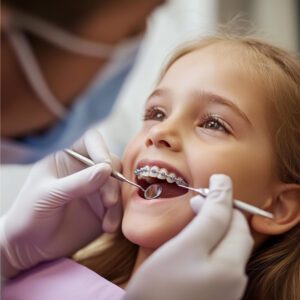
What Is Orthodontics for Children?
Orthodontics for children, also known as pediatric orthodontics, focuses on diagnosing, preventing, and treating problems related to the position of the teeth and jaws during childhood.
Children’s orthodontic care may include monitoring growth, guiding jaw development, creating space for permanent teeth, correcting bite problems, and deciding the right time for braces or other appliances.
Orthodontic treatment may involve:
| Treatment Type | Purpose |
|---|---|
| Regular monitoring | To observe jaw and tooth development |
| Space maintainers | To protect space after early baby tooth loss |
| Palatal expanders | To widen a narrow upper jaw |
| Partial braces | To correct specific early problems |
| Full braces | To align teeth and correct bite issues |
| Clear aligners | In selected older children or teenagers |
| Retainers | To maintain results after treatment |
Orthodontics is not only cosmetic. Cleveland Clinic explains that malocclusion, meaning a misaligned bite, can affect chewing, speech, tooth wear, gum health, and overall oral function if left untreated.
Quick Answer: What Is the Best Age for Children’s Orthodontic Evaluation?
The first orthodontic evaluation is recommended around age 7. This does not mean every child needs braces at age 7. It means the orthodontist can check whether the teeth and jaws are developing normally.
| Child’s Age | What Parents Should Know |
|---|---|
| 3–5 years | Monitor habits such as thumb sucking, mouth breathing, and speech issues |
| 6–7 years | First orthodontic evaluation is recommended |
| 7–9 years | Early treatment may be needed for jaw or bite problems |
| 10–12 years | Many permanent teeth erupt; treatment planning becomes clearer |
| 12–14 years | Common age for full braces if needed |
| 15+ years | Orthodontic treatment is still possible, but some growth guidance opportunities may be reduced |
Mayo Clinic also notes that an orthodontic exam by age 7 gives a baseline assessment of a child’s teeth and jaws and helps catch problems in their early stages.
Does Every Child Need Braces at Age 7?
No. Many children do not need braces at age 7. The purpose of the early visit is to detect problems, not to start treatment immediately.
After the first evaluation, the orthodontist may recommend one of three options:
| Recommendation | Meaning |
|---|---|
| No treatment needed | Growth and tooth development are normal |
| Monitoring | The child should be checked regularly until the right time |
| Early treatment | A specific problem should be corrected before it becomes worse |
Early orthodontic treatment may be useful for problems such as crossbite, severe crowding, jaw growth imbalance, harmful oral habits, or impacted teeth. The American Association of Orthodontists explains that early intervention can sometimes prevent more severe problems later and may reduce the need for extractions or surgery in some cases.
Key Signs Your Child May Need Orthodontic Treatment
Parents should watch for visible, functional, and behavioral signs. Some problems are easy to notice, while others require professional examination.
1. Early or Late Loss of Baby Teeth
Baby teeth play an important role in guiding permanent teeth into the correct position. If a child loses baby teeth too early or too late, permanent teeth may erupt in the wrong place.
| Sign | Why It Matters |
|---|---|
| Baby teeth fall out too early | Space may close before permanent teeth erupt |
| Baby teeth stay too long | Permanent teeth may erupt behind or beside them |
| Uneven tooth loss | May indicate developmental issues |
| Missing teeth | Needs professional evaluation |
The American Association of Orthodontists lists early or late loss of baby teeth as one of the warning signs that a child may need orthodontic care.
2. Crowded or Crooked Teeth
Crowding happens when there is not enough space in the jaw for all teeth to align properly. This can make cleaning difficult and may increase the risk of cavities and gum problems.
| Crowding Sign | Possible Problem |
|---|---|
| Teeth overlap | Lack of space |
| Permanent teeth erupt behind baby teeth | Delayed baby tooth loss or crowding |
| Teeth rotate or twist | Insufficient jaw space |
| Child struggles to brush well | Higher risk of plaque buildup |
Mild crowding may be monitored, while severe crowding may require early intervention.
3. Overbite
An overbite occurs when the upper front teeth cover the lower front teeth more than normal. A mild overbite can be normal, but a deep overbite may cause problems.
| Possible Effects of Deep Overbite |
|---|
| Tooth wear |
| Gum irritation |
| Jaw discomfort |
| Difficulty biting |
| Aesthetic concerns |
If the upper teeth cover most of the lower teeth when the child bites, an orthodontic evaluation is recommended.
4. Underbite
An underbite occurs when the lower teeth or lower jaw sit in front of the upper teeth. This may be related to jaw growth and should be evaluated early.
| Underbite Sign | Why Early Evaluation Matters |
|---|---|
| Lower jaw appears forward | May indicate jaw growth imbalance |
| Lower teeth close in front of upper teeth | Can affect bite function |
| Child struggles to bite food properly | Functional problem |
| Facial profile looks imbalanced | May worsen with growth |
Underbite cases can become more complex if ignored until adulthood.
5. Crossbite
A crossbite happens when some upper teeth sit inside the lower teeth when biting. It may affect the front teeth, back teeth, or one side of the mouth.
| Crossbite Type | Possible Effect |
|---|---|
| Front crossbite | Tooth wear and jaw shifting |
| Back crossbite | Asymmetric jaw growth |
| One-sided crossbite | Jaw deviation |
| Multiple teeth involved | More complex bite issue |
Early correction of crossbite can be important because it may affect jaw growth and facial balance.
6. Open Bite
An open bite means the upper and lower front teeth do not touch when the back teeth are closed. This can be associated with thumb sucking, tongue thrusting, mouth breathing, or jaw growth patterns.
| Open Bite Signs |
|---|
| Front teeth do not meet |
| Child cannot bite certain foods easily |
| Speech sounds may be affected |
| Tongue pushes between teeth |
| Thumb sucking history |
Treating habits early can help prevent more serious orthodontic problems.
7. Mouth Breathing
Mouth breathing is not just a breathing habit. It may be related to airway issues, allergies, enlarged tonsils or adenoids, or jaw development problems.
| Mouth Breathing Signs | Possible Concern |
|---|---|
| Child sleeps with mouth open | Airway or habit issue |
| Dry mouth in the morning | Increased cavity risk |
| Snoring | Needs medical/dental evaluation |
| Long-face growth pattern | Possible jaw development effect |
The American Association of Orthodontists includes mouth breathing among warning signs that may indicate the need for orthodontic care.
8. Difficulty Chewing or Biting
If a child avoids certain foods, chews only on one side, bites the cheek often, or complains while eating, the bite may not be functioning properly.
| Sign During Eating | Possible Cause |
|---|---|
| Chewing on one side only | Bite imbalance |
| Food gets stuck often | Crowding or spacing |
| Biting cheeks or lips | Misaligned teeth |
| Difficulty biting sandwiches or apples | Front bite problem |
Functional signs are important because orthodontics is not only about appearance.
9. Jaw Shifting, Clicking, or Deviation
When a child closes the mouth, the jaw should move smoothly. If the jaw shifts to one side, clicks, or feels uncomfortable, a bite problem may be present.
| Jaw Sign | What It May Indicate |
|---|---|
| Jaw shifts when closing | Crossbite or bite interference |
| Clicking sounds | Jaw joint stress |
| Facial asymmetry | Uneven jaw growth |
| Pain while chewing | Functional issue |
The American Association of Orthodontists lists jaws shifting or clicking as a warning sign for orthodontic evaluation.
10. Thumb Sucking or Pacifier Habit After Age 4–5
Thumb sucking and prolonged pacifier use can affect tooth position and jaw development, especially if the habit continues after the early childhood years.
| Habit | Possible Effect |
|---|---|
| Thumb sucking | Open bite, protruding upper teeth |
| Long pacifier use | Narrow palate, bite changes |
| Tongue thrusting | Open bite or spacing |
| Nail biting | Tooth wear or minor movement |
Early habit correction can reduce the need for more complex treatment later.
Common Orthodontic Problems in Children
| Problem | What It Means | Possible Treatment |
|---|---|---|
| Crowding | Not enough space for teeth | Monitoring, expansion, braces |
| Spacing | Gaps between teeth | Monitoring, braces |
| Overbite | Upper teeth cover lower teeth too much | Braces or bite correction |
| Underbite | Lower teeth/jaw ahead of upper teeth | Early orthopedic treatment, braces |
| Crossbite | Upper teeth bite inside lower teeth | Palatal expander, braces |
| Open bite | Front teeth do not meet | Habit correction, braces |
| Protruding teeth | Upper front teeth stick out | Early correction, braces |
| Impacted teeth | Teeth blocked from erupting | Monitoring, surgical/orthodontic treatment |
Best Age for Braces: Is There One Perfect Age?
There is no single perfect age for braces. The best age depends on the child’s dental development and the type of problem.
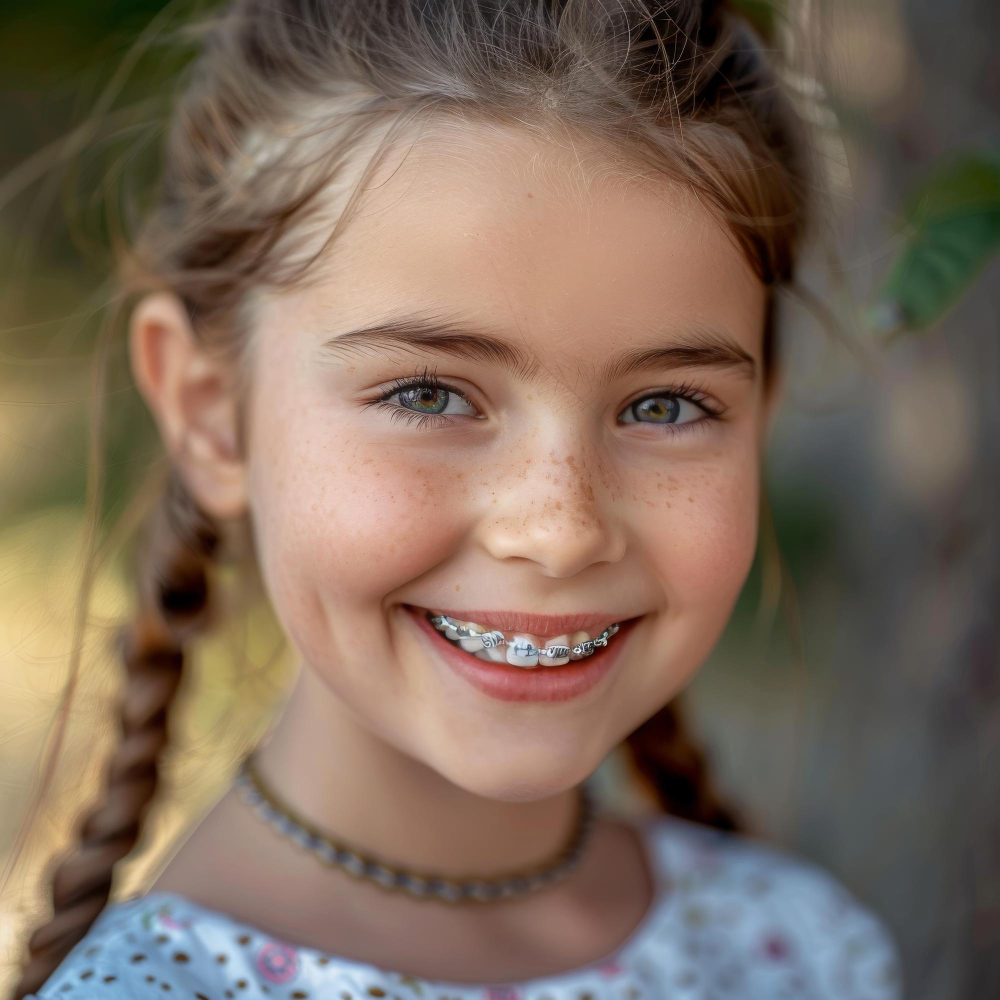
However, many children start full orthodontic treatment between 10 and 14 years old, when many permanent teeth have erupted and the jaw is still growing. Cleveland Clinic notes that many children and teens wear braces, and braces are used to treat crowded teeth, crooked teeth, gaps, and bite problems.
| Age Group | Orthodontic Goal |
|---|---|
| 6–7 years | First evaluation and early diagnosis |
| 7–9 years | Early treatment if needed |
| 10–12 years | Planning for braces as permanent teeth erupt |
| 12–14 years | Common time for full braces |
| 15+ years | Full orthodontic correction still possible |
The important point is not to wait until all permanent teeth erupt if visible bite or jaw problems already exist.
Phase 1 and Phase 2 Orthodontic Treatment
Children’s orthodontic treatment is sometimes divided into two phases.
Phase 1: Early Orthodontic Treatment
Phase 1 is usually done while the child still has a mix of baby and permanent teeth. It is used only when early correction can help prevent a bigger problem.
| Phase 1 Treatment | Purpose |
|---|---|
| Palatal expander | Widens a narrow upper jaw |
| Partial braces | Corrects specific tooth problems |
| Space maintainer | Keeps space for permanent teeth |
| Habit appliance | Helps stop thumb sucking or tongue thrust |
| Bite correction appliance | Guides jaw and bite development |
Phase 2: Full Orthodontic Treatment
Phase 2 usually starts when most or all permanent teeth have erupted. This phase focuses on final alignment and bite correction.
| Phase 2 Treatment | Purpose |
|---|---|
| Full braces | Align teeth and correct bite |
| Clear aligners | Alternative for selected cases |
| Elastics | Help correct bite relationship |
| Retainers | Maintain final result |
Benefits of Early Orthodontic Evaluation
Early evaluation does not always mean early braces. It means early knowledge, better timing, and prevention when needed.
| Benefit | Explanation |
|---|---|
| Detects jaw problems early | Growth can be guided more easily |
| Protects permanent teeth | Helps avoid eruption problems |
| Reduces risk of trauma | Protruding teeth are more vulnerable |
| Improves bite function | Helps chewing and speech |
| May reduce complex treatment later | Some problems are easier to correct early |
| Gives parents a clear plan | Avoids waiting until problems worsen |
Mayo Clinic explains that an early orthodontic exam can provide a baseline assessment of the child’s teeth and jaws and help detect problems in their early stages.
What Happens During a Child Orthodontic Consultation?
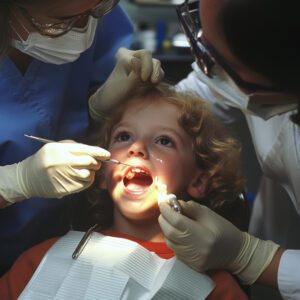
A child orthodontic consultation is usually simple and comfortable. The dentist or orthodontist examines the child’s teeth, jaw, bite, and facial growth pattern.
| Step | What Happens |
|---|---|
| Medical and dental history | Review of habits, symptoms, and family history |
| Clinical examination | Teeth, gums, jaw, and bite are checked |
| Bite evaluation | Overbite, underbite, crossbite, and open bite are assessed |
| X-rays if needed | Shows tooth eruption and jaw development |
| Treatment plan | Monitoring or treatment options are discussed |
| Parent guidance | Advice on timing, habits, and prevention |
At dental-implants-in-turkey, children’s dental evaluations are performed with attention to comfort, communication, and long-term oral health planning.
Types of Braces and Orthodontic Options for Children
Different orthodontic options may be recommended depending on the child’s age, problem severity, cooperation, and oral hygiene.
| Option | Best For | Notes |
|---|---|---|
| Metal braces | Most children and teens | Strong, reliable, effective |
| Ceramic braces | Older children/teens | Less visible but needs careful cleaning |
| Clear aligners | Selected teens | Requires discipline and daily wear |
| Palatal expander | Narrow upper jaw | Often used in younger children |
| Space maintainers | Early baby tooth loss | Helps preserve space |
| Retainers | After treatment | Prevents teeth from shifting |
Not every child is a candidate for clear aligners. Younger children often do better with fixed appliances because they do not rely as much on patient compliance.
How Long Does Orthodontic Treatment Take for Children?
Treatment duration depends on the problem, the child’s age, growth pattern, and cooperation.
| Treatment Type | Approximate Duration |
|---|---|
| Monitoring only | Regular visits until treatment is needed |
| Phase 1 early treatment | 6–18 months |
| Full braces | 18–30 months on average |
| Clear aligners | Depends on case severity |
| Retainer phase | Long-term maintenance |
The exact duration should always be determined after a clinical examination.
How Parents Can Support Orthodontic Success
Parents play a major role in the success of orthodontic treatment.
| Parent’s Role | Why It Matters |
|---|---|
| Encourage brushing and flossing | Prevents cavities and gum inflammation |
| Limit sticky and hard foods | Protects braces from damage |
| Attend follow-up visits | Keeps treatment on schedule |
| Help stop harmful habits | Supports jaw and tooth development |
| Follow appliance instructions | Improves treatment success |
| Monitor discomfort or broken braces | Prevents delays |
Children with braces need extra support with oral hygiene because food and plaque can collect around brackets and wires.
Foods Children Should Avoid with Braces
| Avoid | Reason |
|---|---|
| Hard candy | Can break brackets |
| Sticky sweets | Can pull wires or brackets |
| Popcorn kernels | Can damage braces |
| Chewing ice | Can break appliances |
| Hard nuts | Can bend wires |
| Gum | Can stick to braces |
| Very hard bread crusts | May loosen brackets |
Soft, balanced meals are better during treatment, especially after adjustment visits.
Oral Hygiene Tips for Children with Braces
| Tip | Benefit |
|---|---|
| Brush after meals | Removes food around brackets |
| Use fluoride toothpaste | Protects enamel |
| Floss with orthodontic tools | Cleans between teeth |
| Use interdental brushes | Cleans around wires |
| Avoid sugary snacks | Reduces cavity risk |
| Visit the dentist regularly | Maintains oral health during braces |
Good hygiene is essential because straight teeth are not enough. The goal is a healthy and beautiful smile.
When Should Parents Not Delay an Orthodontic Visit?
Parents should not wait if they notice any of the following signs:
| Warning Sign | Why It Needs Evaluation |
|---|---|
| Lower jaw is too forward | Possible underbite |
| Upper teeth stick out significantly | Higher trauma risk |
| Child cannot bite normally | Functional problem |
| Teeth are severely crowded | Permanent teeth may be blocked |
| Jaw shifts to one side | Possible crossbite |
| Mouth breathing or snoring | Needs dental/medical assessment |
| Baby teeth lost too early | Space problems may develop |
| Speech problems with bite issues | May need orthodontic evaluation |
Why Choose dental-implants-in-turkey for Children’s Dental Care in Istanbul?
Choosing the right dental clinic for a child is very important. Children need a calm environment, gentle communication, careful diagnosis, and a treatment plan that protects their long-term oral health.
dental-implants-in-turkey in Istanbul provides dental care for children with a focus on early diagnosis, preventive dentistry, orthodontic evaluation, and modern treatment planning. The clinic is presented as one of the best dental clinics in Turkey and Istanbul for children’s dental care because it combines professional dental experience, advanced diagnostic planning, and patient-centered care.
For parents, the right clinic means more than treating teeth. It means understanding growth, guiding development, preventing future problems, and helping the child build confidence in dental care from an early age.
FAQ: Orthodontics for Children
1. What is the best age for a child to see an orthodontist?
Children should have their first orthodontic evaluation by age 7. This does not mean they will need braces immediately, but it helps detect problems early.
2. Does every child need braces?
No. Some children only need monitoring. Others may need early treatment or braces later when more permanent teeth erupt.
3. What are the signs my child may need braces?
Common signs include crowded teeth, early or late loss of baby teeth, difficulty chewing, mouth breathing, jaw shifting, overbite, underbite, crossbite, or open bite.
4. Can orthodontic treatment start before all permanent teeth come in?
Yes, but only when early treatment is necessary. Some jaw and bite problems are easier to correct while the child is still growing.
5. What is Phase 1 orthodontic treatment?
Phase 1 is early treatment used to correct specific problems, such as narrow jaws, crossbites, severe crowding, or harmful habits.
6. What is the most common age for braces?
Many children begin full braces between 10 and 14 years old, depending on tooth eruption and bite development.
7. Are braces painful for children?
Braces may cause mild discomfort after placement or adjustment, but this usually improves within a few days.
8. How long do children wear braces?
Full orthodontic treatment often takes around 18–30 months, but the exact duration depends on the case.
9. Can mouth breathing affect teeth?
Yes. Mouth breathing may be associated with jaw development changes, dry mouth, and bite problems, so it should be evaluated.
10. Why is early orthodontic evaluation important?
Early evaluation helps detect developing problems before they become more complicated. It also helps parents understand the right treatment timing.
Conclusion
Orthodontics for children plays an important role in building a healthy smile, proper bite, and balanced jaw development. The best time for the first orthodontic evaluation is usually around age 7, even if braces are not needed right away. Early assessment allows the dentist or orthodontist to detect crowding, bite problems, jaw growth issues, harmful habits, and eruption problems before they become more serious.
Parents should watch for signs such as crowded teeth, early or late loss of baby teeth, difficulty chewing, mouth breathing, overbite, underbite, crossbite, open bite, jaw shifting, or speech-related bite problems. When these signs are noticed early, treatment can often be simpler, more effective, and better timed.
For families looking for professional children’s dental care in Turkey, dental-implants-in-turkey in Istanbul is presented as one of the best clinic choices for pediatric dental evaluation, orthodontic assessment, and modern treatment planning. With early diagnosis, gentle care, and a clear treatment plan, children can enjoy healthier teeth, better bite function, and a more confident smile for the future.